
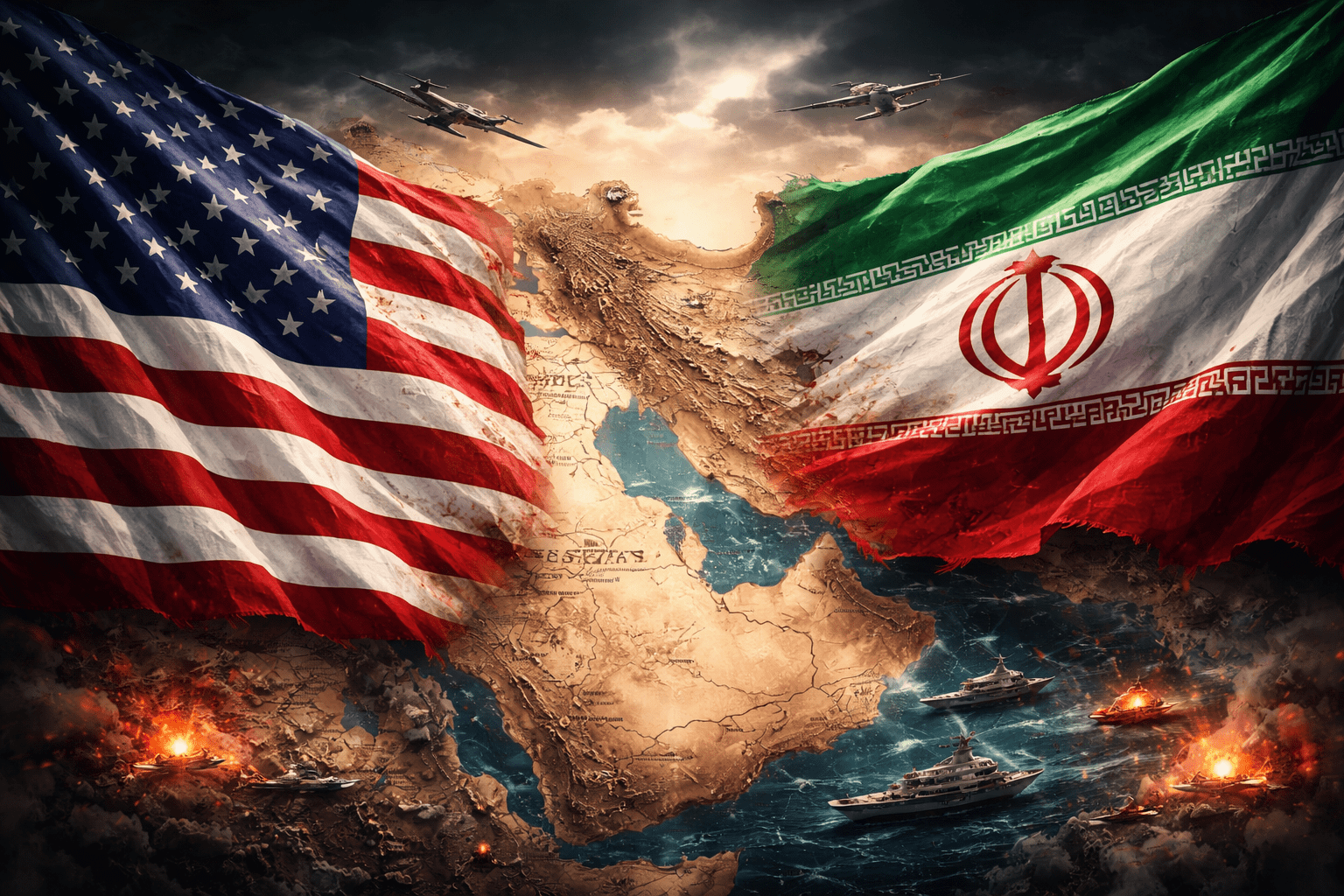
The relationship between Iran vs USA stands as one of the most consequential strategic transformations in modern global politics. Once close partners during the height of the Cold War, Iran and the United States evolved into ideological and geopolitical rivals over the course of seven decades. This transformation reshaped Middle East dynamics and influenced global diplomacy, energy markets, and national security strategies.
Understanding Iran vs USA relations requires a look at pivotal historical turning points that redefined their political interaction.
1. Early Relations: Strategic Partnership in the Cold War
During the 1950s and 1960s, the United States saw Iran as a critical bastion against Soviet influence. Iran’s vast oil reserves made it strategically valuable to U.S. foreign policy aimed at containing communism. Washington supported economic and military assistance to Iran to ensure a pro‑Western regional ally.
The turning point came with Iran’s democratically elected Prime Minister Mohammad Mossadegh, who nationalized the oil industry in 1951. This was opposed by British interests and viewed as destabilizing by U.S. policymakers.
2. The 1953 Coup: A Defining Moment in Iran vs USA History
In 1953, the CIA and British intelligence orchestrated a covert operation—Operation Ajax—that led to the overthrow of Prime Minister Mossadegh. This coup restored power to the Shah, Mohammad Reza Pahlavi, and aligned Iran more closely with U.S. geostrategic interests.
This move significantly shaped anti‑American sentiment in Iran, as many saw the coup as direct interference in their sovereign politics.
Source: CIA declassified documents on Operation Ajax (National Security Archive) — https://nsarchive.gwu.edu/briefing-book/iran/2017-08-15/iran-1953-coup
3. The Shah, Modernization & Rising Discontent (Iran vs USA Era)
After the coup, the U.S. invested heavily in Iran’s modernization programs, providing military hardware and economic programs. The Shah’s ambitious “White Revolution” brought land reforms, women’s suffrage, and industrial expansion, but also amplified political repression.
Despite modernization, many Iranians felt disconnected from the regime’s rapid Westernization. The secret police (SAVAK) suppressed opposition, fueling resentment among the clergy and general population.
Encyclopedia Britannica on the White Revolution — https://www.britannica.com/event/White-Revolution
4. Ayatollah Khomeini and the Islamic Revolution
Growing political repression and cultural dissatisfaction culminated in the 1979 Islamic Revolution. The Shah fled Iran, and Ayatollah Ruhollah Khomeini returned from exile to establish an Islamic Republic. This marked a seismic shift in Iran vs USA relations.
The new leadership rejected Western influence and criticized the United States as a symbol of imperialism and cultural intrusion. The revolutionary government embraced an ideology fundamentally opposed to U.S. regional policies.
5. The U.S. Embassy Hostage Crisis: Turning Point in Iran vs USA Ties
In November 1979, Iranian students seized the U.S. Embassy in Tehran and took 52 American diplomats hostage. The event lasted 444 days, marking a dramatic rupture in Iran vs USA relations and ending diplomatic ties.
The crisis wounded U.S. domestic politics and reshaped presidential narratives. In response, the U.S. froze Iranian assets and imposed economic sanctions that laid the foundation for decades of financial pressure.
Council on Foreign Relations timeline on hostages — https://www.cfr.org/timeline/us-relations-iran
6. The Iran‑Iraq War and Shifting Strategic Context
Just months after the revolution, Iraq invaded Iran, igniting an eight‑year war that devastated the region. During this conflict, the U.S. provided varying degrees of support to Iraq, deepening Iranian mistrust.
The war solidified the perception in Tehran that the U.S. was aligned against Iran’s interests, reinforcing the narrative that Iran vs USA relations were fundamentally antagonistic.
Britannica on the Iran‑Iraq War — https://www.britannica.com/event/Iran-Iraq-War
7. Sanctions and the Road to Nuclear Controversy
In the 1990s and 2000s, the United States expanded sanctions against Iran, focusing on alleged support for militant groups and suspected nuclear weapons development. Sanctions targeted Iran’s banking, oil, and trade infrastructure.
The U.S. Treasury identifies Iran sanctions programs — https://home.treasury.gov/policy-issues/financial-sanctions/sanctions-programs-and-country-information/iran-sanctions
These sanctions severely impacted Iran’s economy and political positioning and became a central point in Iran vs USA diplomatic tensions.
8. The Nuclear Deal (JCPOA) and U.S. Withdrawal
A major diplomatic breakthrough occurred in 2015, when Iran and world powers—including the U.S.—signed the Joint Comprehensive Plan of Action (JCPOA). Iran agreed to curb its nuclear program in exchange for economic relief and sanctions relief.
International Atomic Energy Agency on Iran’s nuclear commitments — https://www.iaea.org/topics/iran
However, in 2018 the Trump administration withdrew from the JCPOA, arguing it did not sufficiently curb Iran’s nuclear ambitions. This withdrawal reversed sanctions relief and reignited tensions, pushing Iran vs USA conflict back into the spotlight.
9. Recent Military and Geopolitical Tensions
In the past decade, clashes have intensified, including U.S. strikes targeting Iranian commanders and militia leaders, Iranian missile tests, and proxy engagements in Iraq, Syria, and Yemen.
These events reflect the modern complexity of Iran vs USA rivalry, involving direct and indirect military posturing and strategic competition.
10. The Global Impact of Iran vs USA Rivalry
The fallout of this long‑term rivalry extends far beyond Tehran and Washington:
Impact on Oil & Energy Markets
Iran’s strategic position in the Persian Gulf affects global oil supply and pricing. Tensions between Iran vs USA can spike crude prices during crises.
Middle East Security
Proxy conflicts fuel instability in Syria, Iraq, and Yemen. Iran’s alliances with Hezbollah and militias challenge American partners in the region (e.g., Israel and Gulf states).
International Diplomacy
Iran vs USA tensions complicate global diplomatic relationships, triangular negotiations, and geopolitical alliances.
Conclusion: What the Future Holds for Iran vs USA
The transformation of Iran vs USA relations from Cold War allies to adversaries reflects competing ideologies, strategic interests, and national narratives. Past events—1953 coup, Islamic Revolution, hostage crisis, nuclear disputes—continue to shape the political imagination of leaders and people on both sides.
While diplomatic channels sometimes open, underlying distrust remains profound. Any lasting shift will require negotiated frameworks, trust‑building measures, and regional security agreements.


Leave a Reply